13С-APT Experiment
Determining Carbon Multiplicity Without Losing Quaternary Signals

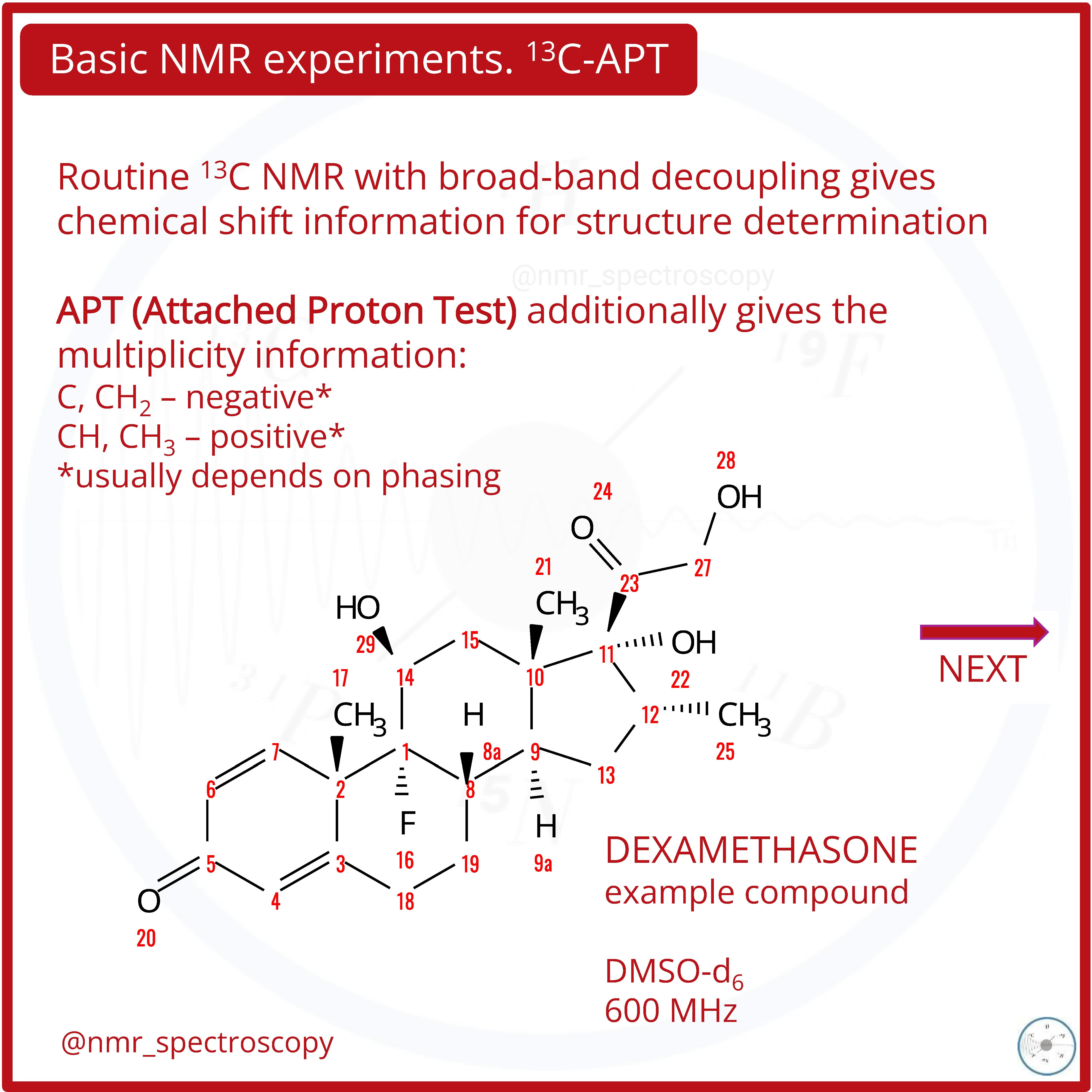
While a routine 13С NMR spectrum with broad-band decoupling is essential for identifying chemical shifts and determining molecular structure, it doesn’t tell the whole story. To fully assign a spectrum, we need to know the multiplicity—how many protons are attached to each carbon. This is where the APT (Attached Proton Test) becomes an invaluable tool in your NMR toolkit.
How to Interpret the APT Spectrum
Unlike a standard carbon spectrum where all signals point in the same direction, APT uses phase modulation to differentiate carbon types. Depending on your phasing, the signals will typically appear as follows:
Negative (Pointing Down): Quaternary carbons (C) and methylene groups (CH₂).
Positive (Pointing Up): Methine groups (CH) and methyl groups (CH₃).
Case Study: Dexamethasone (600 MHz, DMSO-d6)
In the provided example, we can see a clear application of this experiment on Dexamethasone.
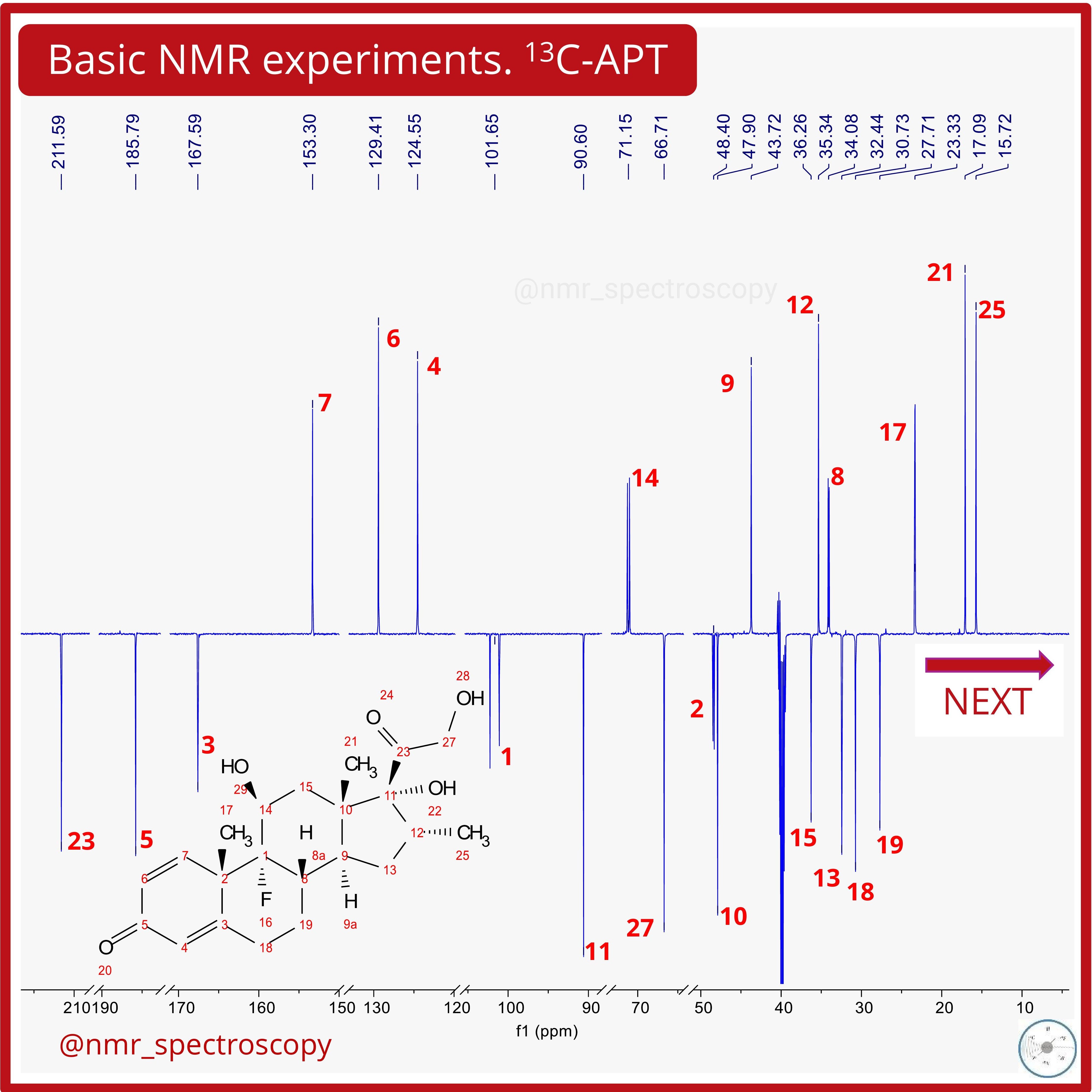
Notice how the quaternary carbons—such as the carbonyl (at position C5 or C23) and the quaternary centers (C3, C2 etc.) — point downward, while the methyl groups (like C21 and C25) and CH groups (C6, C4) point upward. This visual separation makes the assignment of complex steroid skeletons significantly more efficient.
Optimization and Potential Pitfalls
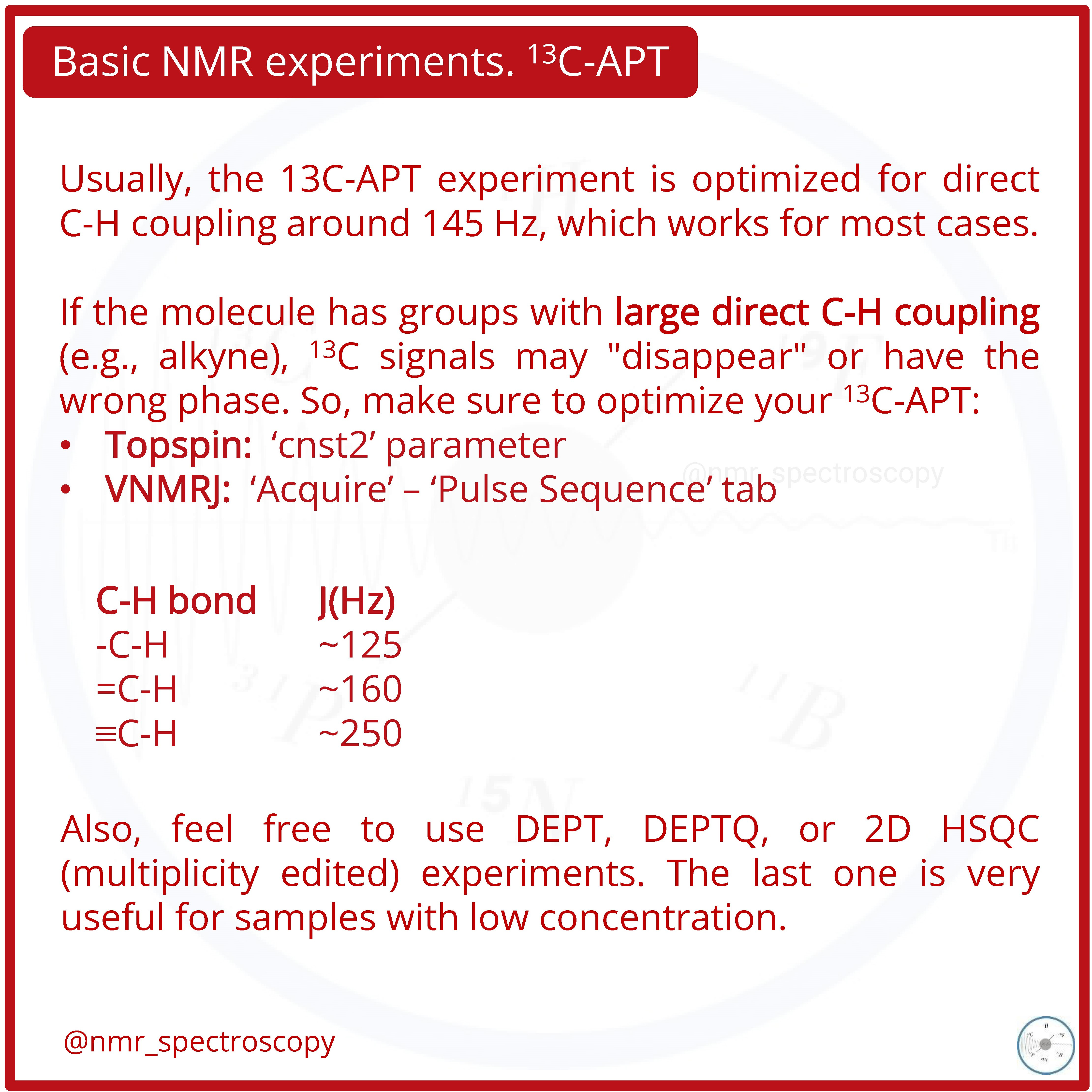
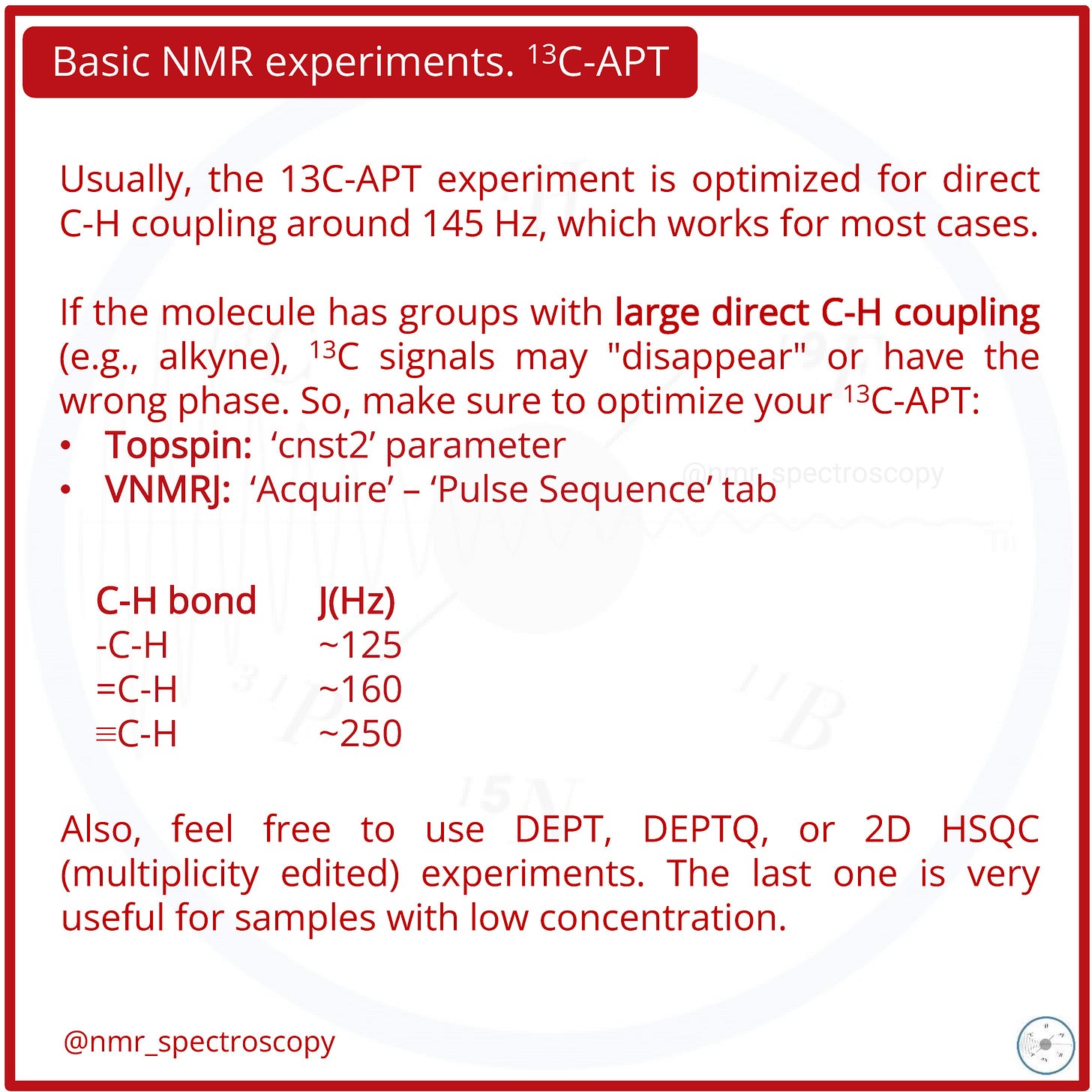
The 13C-APT experiment is typically optimized for a direct C-H coupling constant 1J(CH) of approximately 145 Hz. This value works for most organic molecules where:
Alkanes (-C-H): 1J(CH) ~ 125 Hz.
Alkenes (=C-H): 1J(CH) ~ 160 Hz.
Pro Tip: If your molecule contains groups with very large 1J(CH) values, such as alkynes (1J(CH) ~ 250 Hz), the signals may “disappear” or show the wrong phase. To fix this, you must optimize your parameters:
Topspin: Adjust the
cnst2parameter.VNMRJ: Go to the ‘
Acquire’– ‘Pulse Sequence’tab.
Choosing the Right Tool
While APT is excellent because it preserves quaternary carbon signals, don’t forget about other techniques:
DEPT/DEPTQ: Great alternatives for multiplicity editing.
2D HSQC (Multiplicity Edited): Highly recommended for samples with low concentrations, as it leverages the higher sensitivity of protons.
What’s Next?
In my next post, I will be diving deep into the HSQC (Heteronuclear Single Quantum Coherence) experiment. As noted, this 2D technique is an incredibly useful tool, especially for samples with low concentrations. We will explore how multiplicity editing works in the 2D domain and how to leverage proton sensitivity to save precious instrument time.
Stay Connected
If you found this information useful, make sure to subscribe here on Substack to receive future NMR deep dives directly in your inbox.